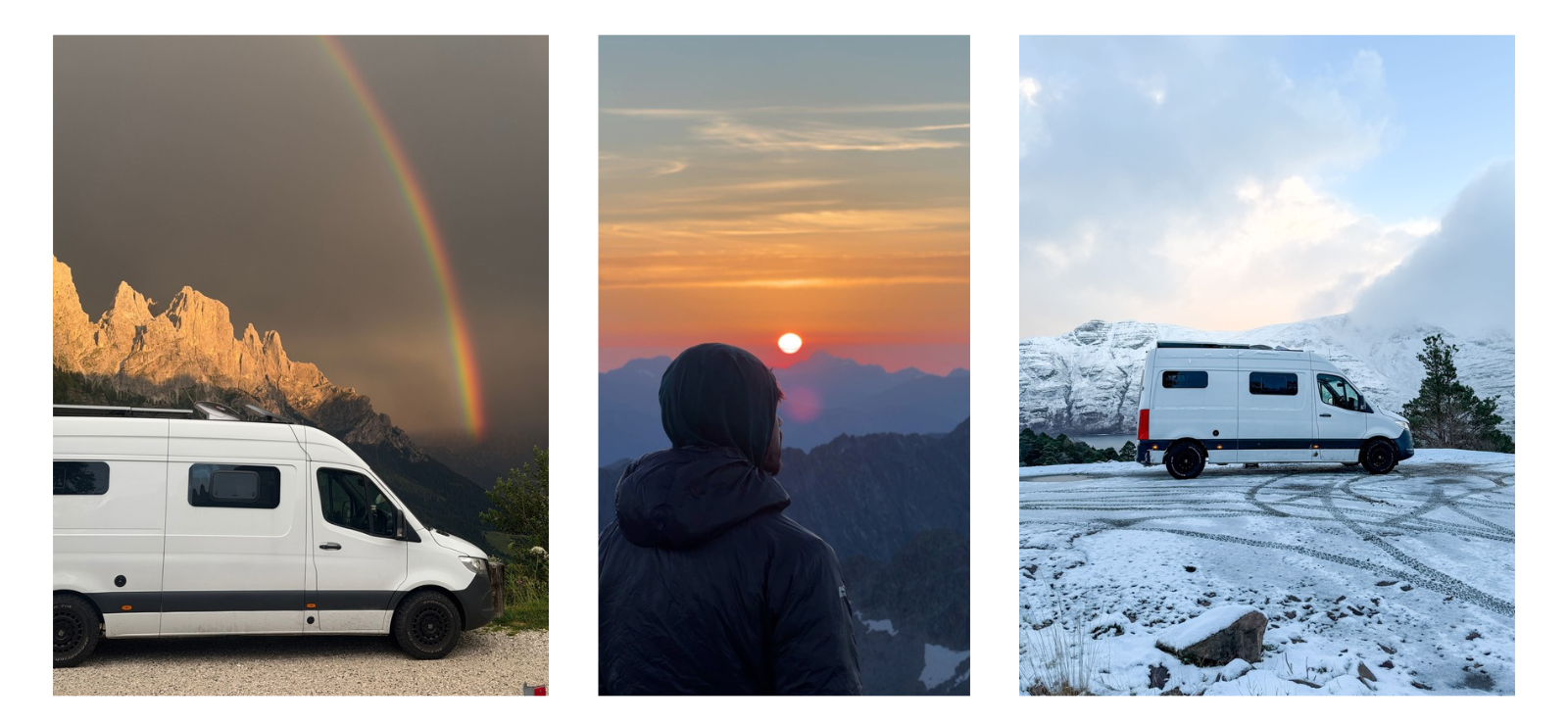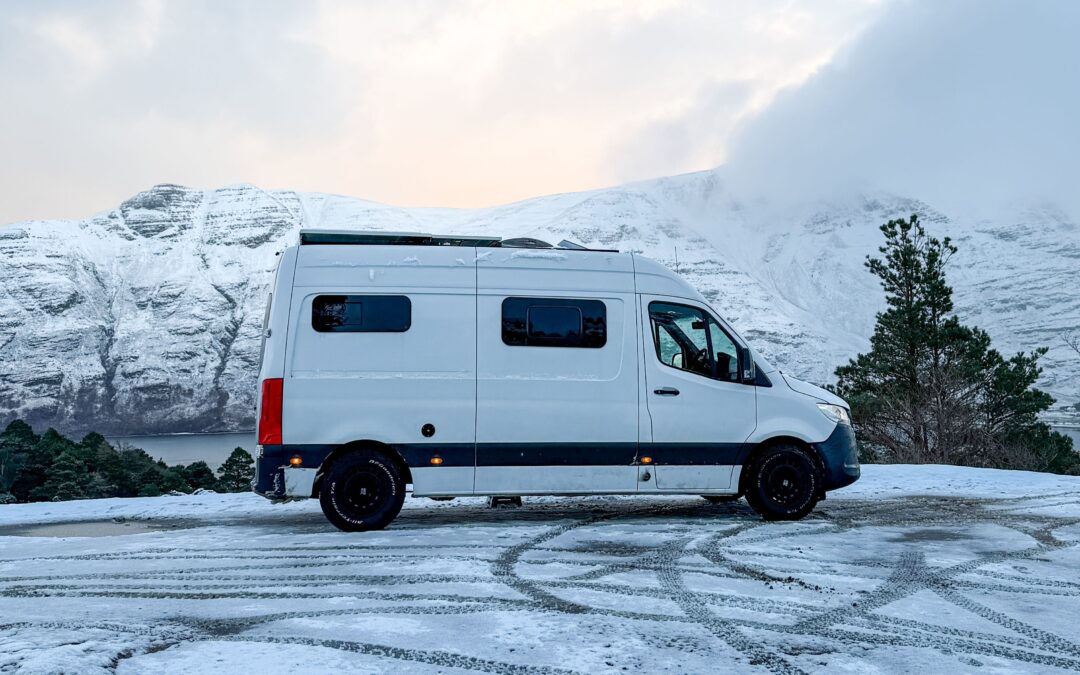
Life beyond the office: Living and working full time from my self converted campervan
How it all began…
Life before the van
Last year, I was living in Manchester city centre, working full-time in an office whilst studying for my ACA qualification. In my spare time, I was trying to fit in as many wild camps, runs, hikes and adventures as possible.
Over time, I realised I was constantly looking forward to the weekend, when I could escape the city and get back into the mountains. I started wondering whether there was a way to spend more time doing what I loved without putting my career on hold.
The introduction to van life
My girlfriend and I decided to hire a campervan for a week in northern Italy, exploring lakes, climbing mountains and taking in the incredible scenery. We loved the freedom of waking up somewhere new and deciding where to go next.
By the time we returned home, the seed had been planted. We started exploring whether full-time van life could work alongside our careers.
Planning and making it happen
I spent much of my spare time working through the finances, finding the right van, planning the conversion and figuring out how to find a job that would allow me to work remotely. There was a lot to consider, from powering the van to ensuring I could reliably do my job on the road.
I’ll admit, it felt daunting at first. Were we really going to give up our flat in Manchester? How would I find a remote job? And what if it all went wrong?
With the help of a recruiter, I found de Jong Phillips. After my interview, I felt it could be the right fit. The team were not only great people to work with but were also open to the idea of me working full-time on the road. It was an unconventional arrangement, but having an employer willing to explore how we could make it work was a huge step towards turning the idea into reality.
Taking the leap
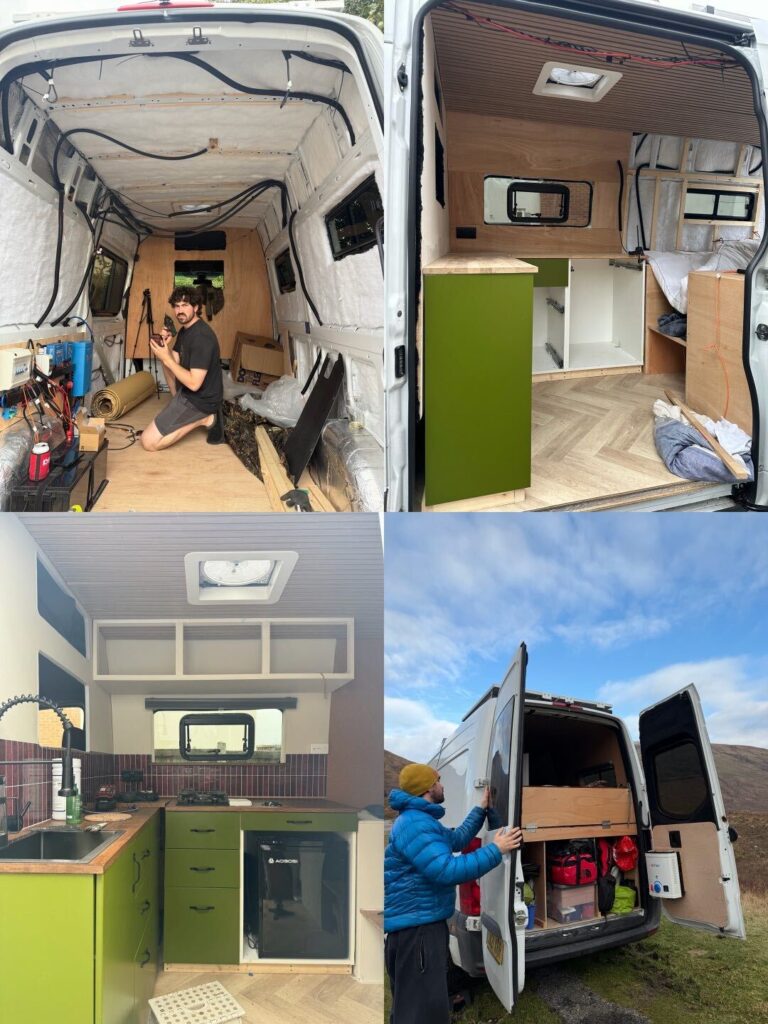
With a plan in place, we gave up our flat in Manchester, bought our Mercedes Sprinter and moved in with my girlfriend’s family to begin what would become a colossal conversion project.
Over the following months, we worked to turn an empty van into a home we could live and work from full-time. It was a big leap of faith, and we had no guarantees that everything would work out. But we knew that if we didn’t give it a go, we’d always wonder what might have been.
The set up: Electrics, Wi-Fi and workspace
Turning a van into a home is one thing, but making it somewhere you can reliably work full-time is another challenge altogether. Before setting off, we needed to figure out how to power everything, stay connected and create a workspace that would allow me to continue working as an accountant.
Powering a home and office on wheels
We wanted to live off-grid for extended periods, including in remote locations, so designing a reliable electrical system was essential. At the heart of our setup is a 628Ah Fogstar lithium leisure battery, supported by three charging methods:
- Solar: 390W of solar panels on the roof generate electricity throughout the day.
- While driving: A Victron Orion XS 50A DC-DC charger charges the leisure battery using the van’s alternator.
- Mains electricity: We can plug in at campsites when we need an additional way to recharge.
This combination gives us the flexibility to work and live without relying on mains electricity every day. In summer, we can spend months off-grid without plugging in. Winter is a different story, with shorter days and less solar generation meaning we typically visit a campsite every couple of weeks to recharge before heading back into the wilderness.
It’s a system that gives us a huge amount of freedom, but it also means being mindful of our energy use and planning ahead.
12V vs 230V electricity
Most of our van’s everyday appliances, including the fridge, diesel heater, roof fan and lights, run directly from our 12V leisure battery system. However, working remotely means we also need 230V electricity to power equipment such as my laptops, monitors and Starlink. To make this possible, we use a Victron MultiPlus inverter, which converts the battery’s 12V DC electricity into 230V AC, just like a standard household plug socket. This allows us to run our home and office from the same battery system, even when we’re parked miles away from the nearest mains electricity supply.
Staying Connected: Starlink
After electricity, a reliable internet connection is arguably the most important part of working full-time from the van. We use a Starlink Gen 3 system on a Roam plan, allowing us to access satellite internet while travelling.
One of the biggest advantages is being able to work from remote locations without relying on mobile phone signal. Whether I’m joining meetings, accessing work systems or keeping in touch with the team, Starlink allows me to work reliably without being tied to a town or campsite. As long as we have a suitable setup and a clear view of the sky, we can stay connected while enjoying the freedom of off-grid living.
Creating a workspace
With the electricity and internet sorted, the next challenge was creating a comfortable, practical space where I could work full-time.
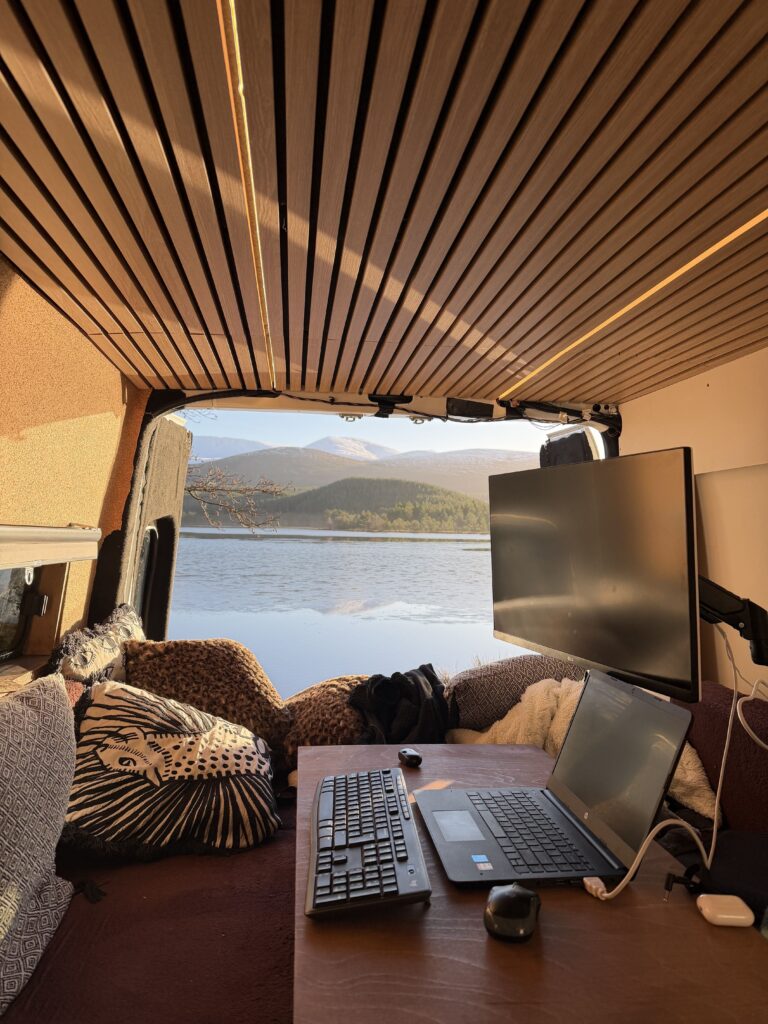
Rather than installing a fixed bed, which would take up a significant amount of space, I decided to build a large U-shaped seating area with a central table and an extendable monitor. During the day, this doubles as my office, giving me plenty of desk space to work comfortably. At night, the table drops down to transform the seating area into a king-size bed.
It’s turned out to be one of the best decisions we made during the conversion. The space is incredibly versatile, giving us a proper working environment during the day while still feeling like a comfortable home when the laptop closes.
The setup in practice
Having now lived and worked in the van for nearly 12 months, I can honestly say that I wouldn’t change much about our setup. From the electrical system to the Starlink connection and the workspace, it’s all come together to make working full-time on the road surprisingly straightforward.
Of course, there are things we need to plan around, particularly during the winter months, but the setup has given us the freedom to live in remote locations without compromising on my work. Ultimately, that’s exactly what we set out to achieve.
Working life on the road
A typical working day
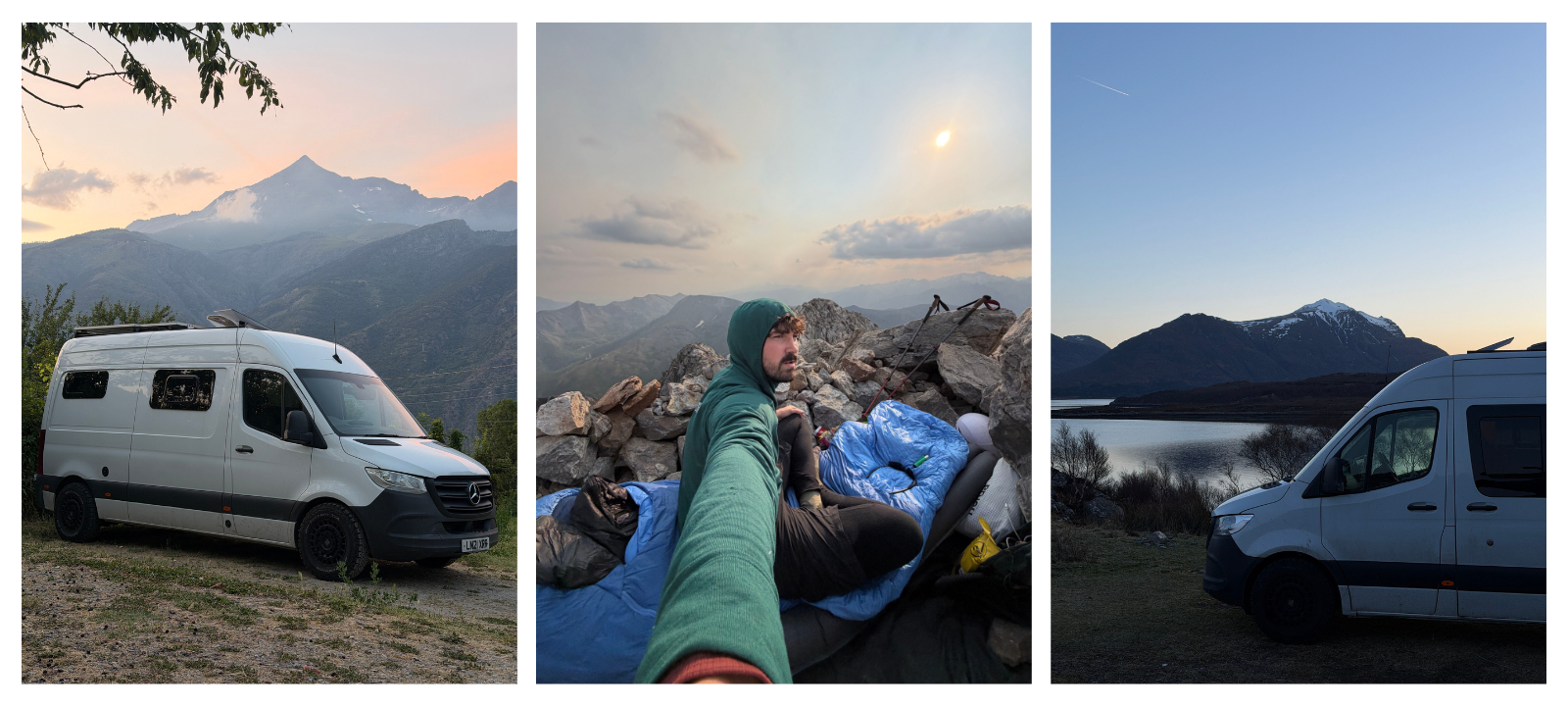
Although we spend much of our time in remote locations, whether that’s in the Scottish Highlands or somewhere in Europe, my working life is surprisingly structured. I work from 8am until 4:30pm, just as I would in a conventional office, but instead of commuting through a busy city, I might start the day with a run in the mountains before logging on from the van.
For me, that balance is what makes this lifestyle work so well. I have a consistent routine and dedicated time to focus on my job, but I also have the flexibility to make the most of the hours outside work. Whether that’s exploring a new location, heading out for an evening walk or simply having time to ourselves, the difference is being able to enjoy the places we travel to without having to wait until the weekend.
Managing deadlines and responsibilities
Living in a van doesn’t change the fact that I have deadlines to meet, clients to look after and responsibilities to manage. During busy periods, work has to take priority, and our travel plans need to fit around that.
One of the biggest things I’ve learnt is the importance of planning ahead. If I have a busy week or important meetings coming up, we’ll make sure we’re somewhere with reliable internet and everything I need to work effectively. Sometimes that means staying in one location for a few days rather than moving on, but that’s all part of making the lifestyle sustainable.
Ultimately, working from the van requires the same organisation and commitment as working anywhere else. The difference is that, with a bit of planning, I can meet my responsibilities while still making the most of my free time.
Motivation and productivity
One question I’m often asked is, “How do you stay motivated when the mountains are right outside?” For me, it’s actually the opposite. I’m motivated by knowing that my career is what allows me to live this lifestyle. Without my job, this wouldn’t be possible, so the two go hand in hand rather than compete with one another.
Of course, making it work also depends on the company you work for. At de Jong Phillips, we have the systems, communication and structure needed to work effectively as a remote team. Knowing I can stay connected with my colleagues and get on with my work, wherever I am, makes a huge difference. It means I can focus on my job during working hours while still enjoying everything this lifestyle has to offer outside them.
From spreadsheets to summits: life outside working hours
A lot of my life outside work is spent planning our next adventure. I’m constantly checking weather forecasts, looking for good weather windows, researching mountains to climb and finding interesting places to camp. That planning means that when I log off for the day or reach the weekend, I can make the most of every opportunity to get outside.
So far, we’ve travelled through 15 different countries and covered more than 17,000 miles in our van, all while fitting in as many adventures as possible along the way.
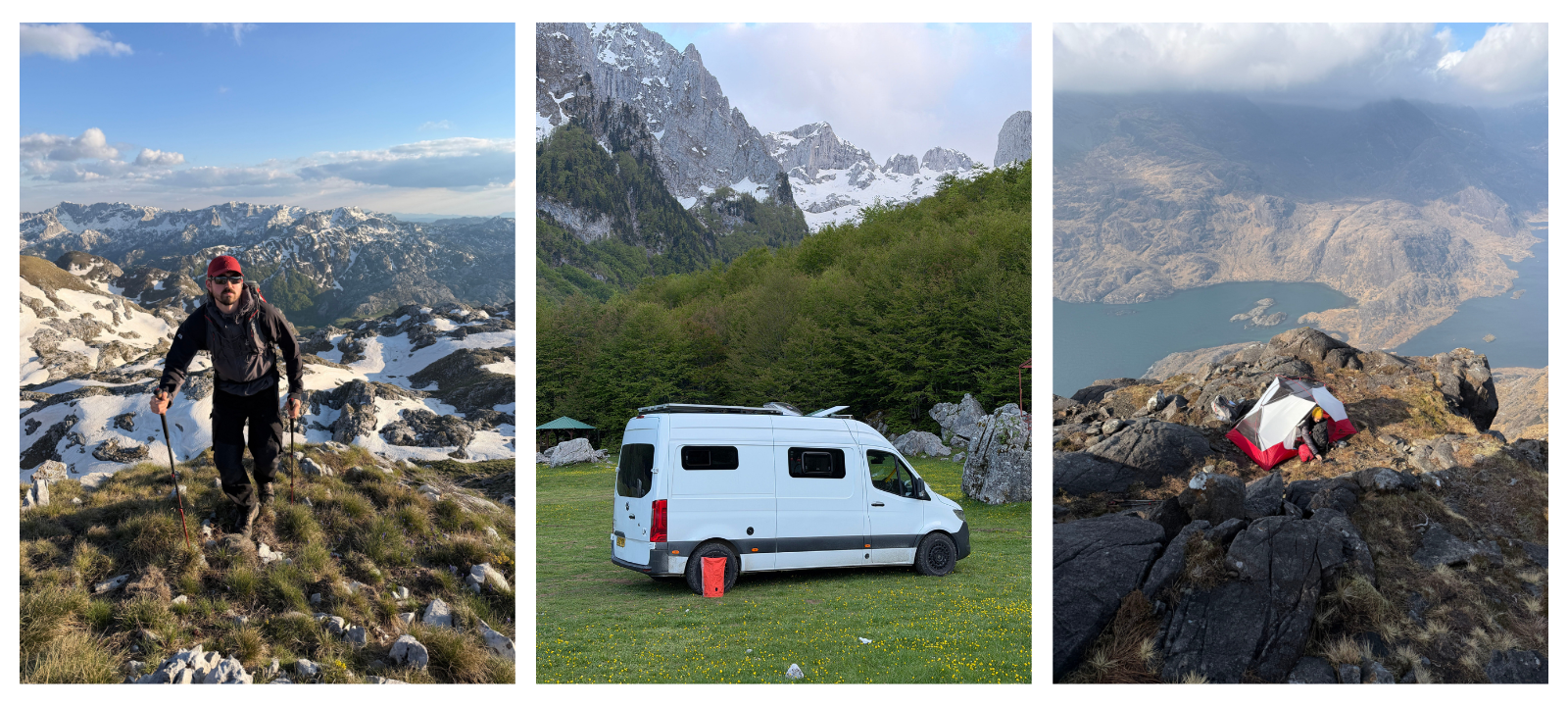
Not every adventure needs a full weekend or a week of annual leave. Sometimes, we’ll finish work at 4:30pm, drive to a mountain and head out for an evening hike, finishing the day with a summit camp before heading back down the following morning.
Making the most of these smaller windows of opportunity means I can save my annual leave for bigger adventures, whether that’s multi-day hikes, long mountain expeditions, canoe-camping trips or even a city break somewhere completely new. It’s about making the most of the time we have, rather than waiting for a few weeks of holiday each year to do the things we love.
Life isn’t always picture perfect
Don’t get me wrong, life on the road isn’t always sunshine and rainbows. We’ve experienced cold, stormy days in the Scottish Highlands, breakdowns and sweltering heat in places where having no air conditioning makes things particularly uncomfortable!
One night that really sticks in my memory was on the northern tip of the Isle of Skye. We’d parked up for the night, but the wind had other ideas! At around 2am, I was woken by the van rocking so violently that it set the alarm off. The wind was so brutal that it even threatened to rip our Starlink off the roof. Completely bewildered and half asleep, I had to climb into the driver’s seat and move the van to somewhere more sheltered in the middle of the night.
It’s moments like these that remind you that, as amazing as van life can be, you’re completely exposed to whatever the weather decides to throw at you!
Then there are the everyday challenges you don’t necessarily see in the photos: finding somewhere to refill our water, deciding where to park for the night, and troubleshooting unexpected problems like a blown fuse or a leaky pipe.
These things can be frustrating at times, and living in a van definitely requires a bit of patience and flexibility. But they’re all part of the experience, and we’ve learnt to take them as they come.
Ultimately, the occasional challenge is a small price to pay for the freedom to explore new places, spend more time outdoors and live life on our own terms. For us, it’s absolutely worth it.
Looking back and where we are going
Looking back, living and working from the van has shown me that building a career and pursuing the things you love don’t have to be mutually exclusive. It takes planning, flexibility and commitment, but having the right working environment makes all the difference. I’m grateful to have found that at de Jong Phillips, which has allowed me to build a career while making the most of life outside work.
For now, we’re not planning on settling down anytime soon. We’ll be heading back to the Scottish Highlands for most of the winter, with plenty more adventures on the horizon. Who knows where we’ll end up after that!